

The Tale of the Chicken Who Tried To Cross the Road, Part Deux
And the Sheep
In this story, the chicken is partially responsible for its own demise.
(No sheep were harmed on my road trip through the Julian Alps.)
I had the very good fortune of getting a three-week teaching gig at the University of Klagenfurt, Austria to teach media processes and effects to graduate students. The teaching schedule was brutal, often six- hour blocks at a time for three or four days, but it did give me the chance to take on mini-escapes over three separate weekends. I had a rental car and was most definitely going to seize the opportunity to visit new cities and countries over these long weekends. Yes, there was grading to be done, but that’s what late nights are for, right?
Klagenfut was so close to the Slovenian border, and I thought, why not?
Talk about a good decision.
I decided to stay in Bled, Slovenia so I’d have the opportunity to be closer to the mountains, be in a smaller more walkable town, and just take in something totally new to me.
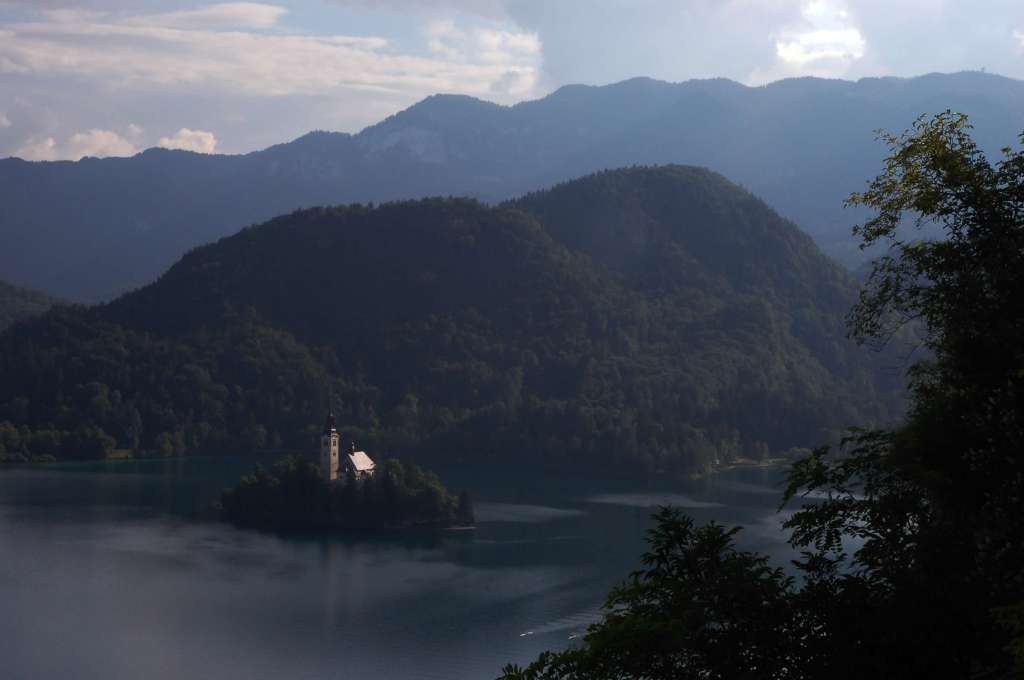
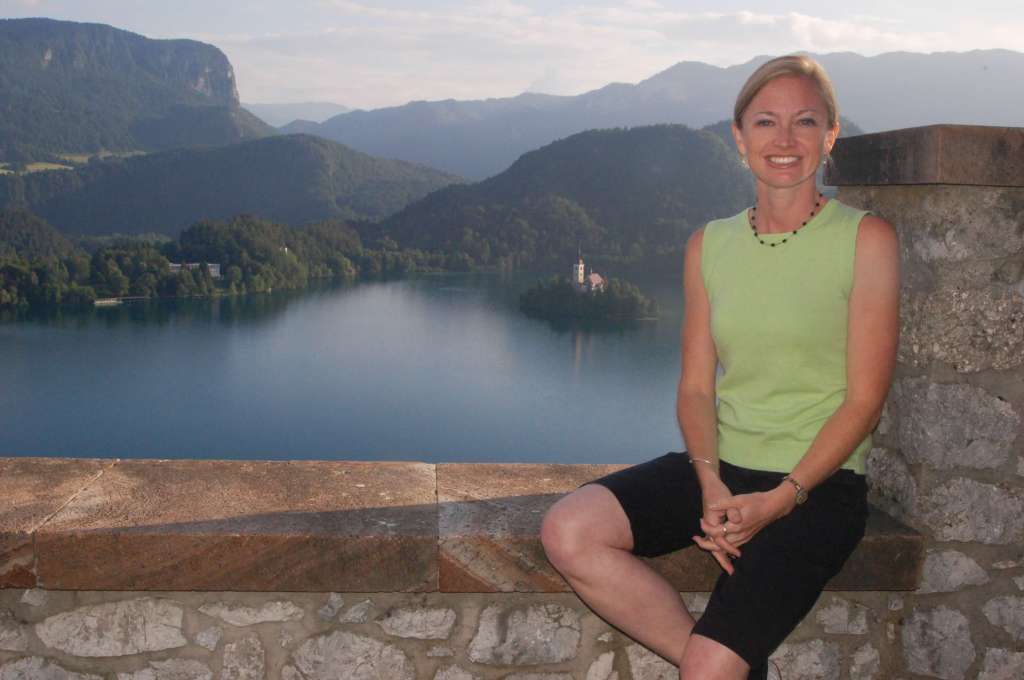
Lake Bled is considered to be the most recognizable tourist attraction in Slovenia, and if I am being honest, I knew very little about Slovenia prior to this trip. I had seen pictures of Lake Bled and the tiny but beautiful island in the middle of the lake, but I truly knew very little else. Lake Bled is a glacial lake in the northwest region of Slovenia, less than an hour from the Austrian border.
I threw a ton of clothing and snacks into my rental car and headed south toward the Slovenian border. As I drove south, the mountains in the Julian Alps were visible, and the excitement for this new adventure was palpable. I easily found my lovely hotel for the three nights (Old Bled House–https://www.oldbledhouse.si/_ ) and after ditching all the clothing and snacks in my super cute room, immediately headed toward the water. I do tend to gravitate toward the water and mountains and Bled was the perfect combination of both.
I passed so many restaurants, inns, hotels, apartments, shops, and people, and I couldn’t wait to explore it all. I found the local tourists’ office close to the lake’s eastern edge (No Rick Steves book for this one) and started making plans for my weekend. But, it was also time to for a history lesson about Bled, the lake, the island, the castle, and the Alps.
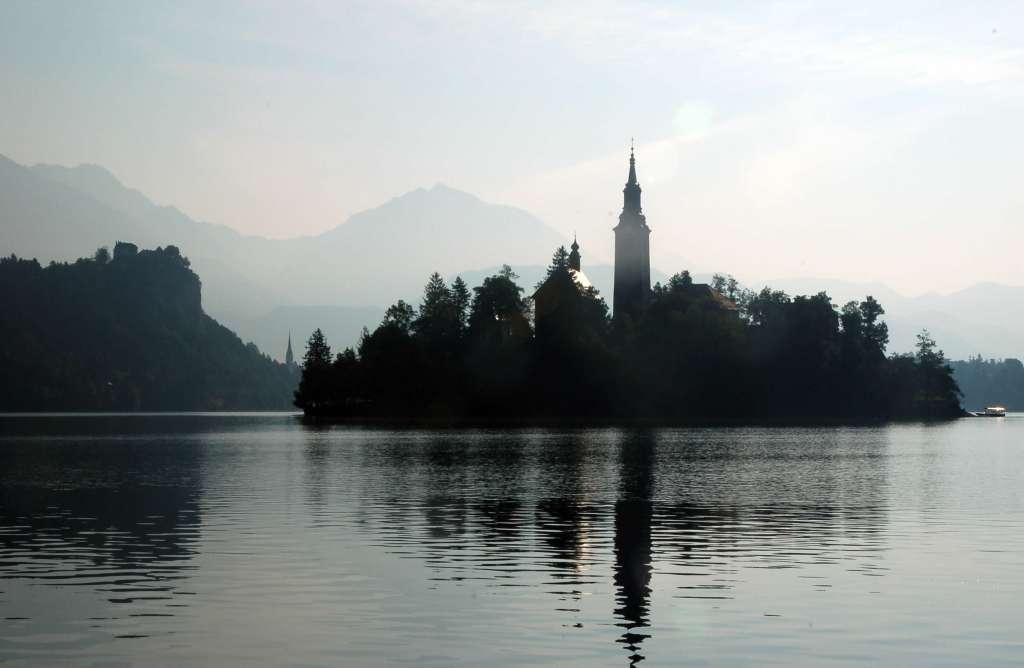
As background, the tiny island in the middle of the lake, Blejski Otok, is also the only island in Slovenia. The island is home to Lake Bled Church, a pretty baroque church that dates back to the 17th century. The church is known as the Church of the Assumption of Mary or more simply, the Chapel of St. Maria. One of the many myths associated with this church is that if you ring the church bell three times, a wish will come true. Another myth is that if a man carries his bride up the steps to their wedding in the church, a happy marriage would follow. I was going to have to go with myth #1 on this one. The trip to the island on one of the traditional wooden boats called a pletna is well worth the time and money (approximately 12 euro). The views are outstanding, and I found it really amazing to be able to see the Julian Alps off to the west and south from the island.

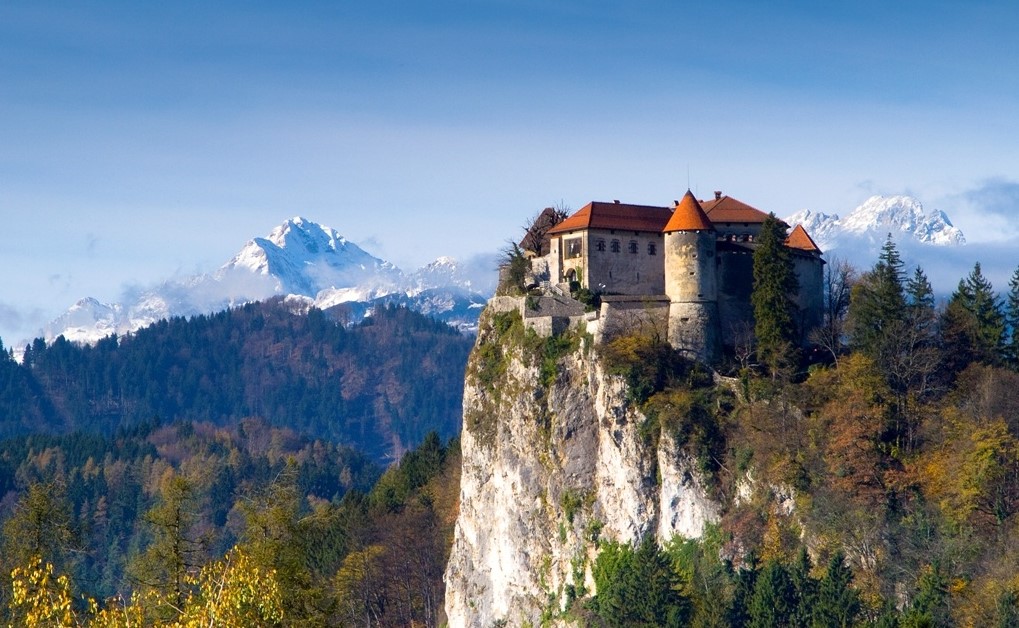
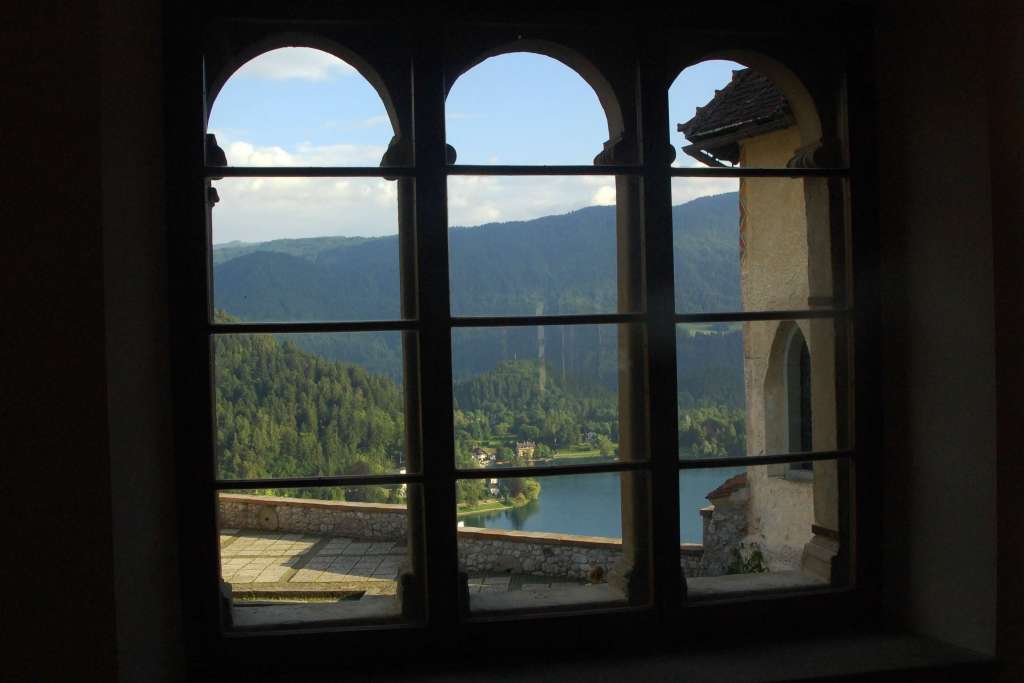
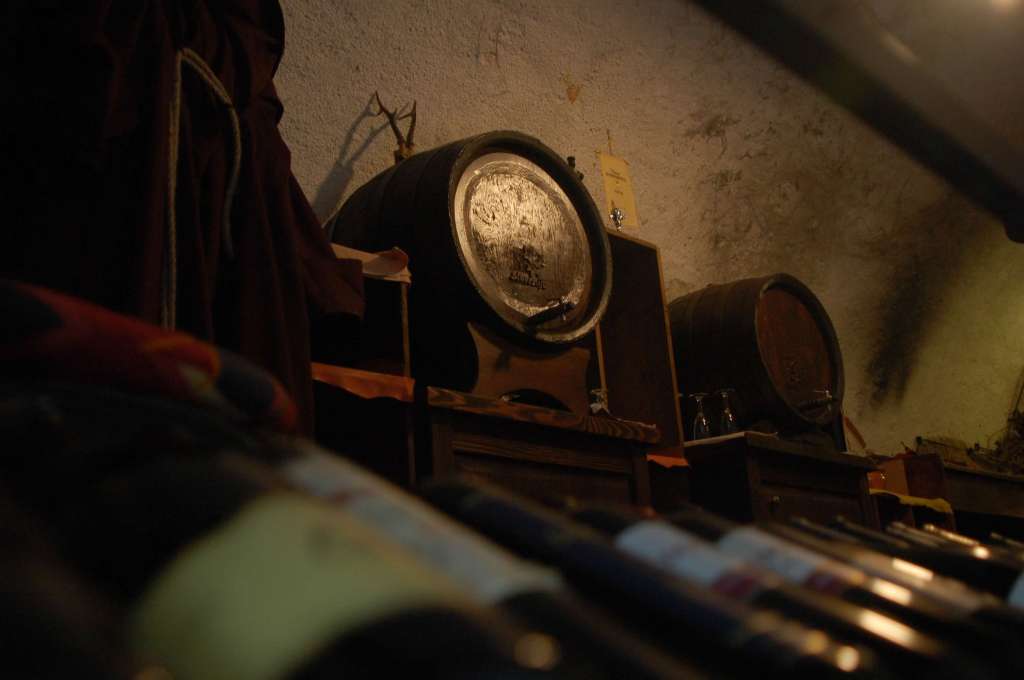
Bled is also home to the 12th century Bled Castle, which towers over Lake Bled. The castle is open to visitors and has a museum, a small printing factory, a winery (definitely stop here), and a restaurant (approximately 13 euro or 8 euro if you are a student). It was a hike to get to the top but definitely worth it because the museum tour gives tourists a glimpse of life in that part of Slovenia. Both the castle and the boat trip to the Blejski Otok are easily doable in a few hours. You could make a day of both of these trips while also doing the Ojstrica Loop, which circles the entire lake. This hike is just under 6 miles with relatively little elevation change, and bonus, views from almost every vantage point (also 10/10 on the must-do list). While there was so much to see and do right around Bled, the mountains were calling.
And, on to the story about the chicken trying to cross the road. And the sheep.
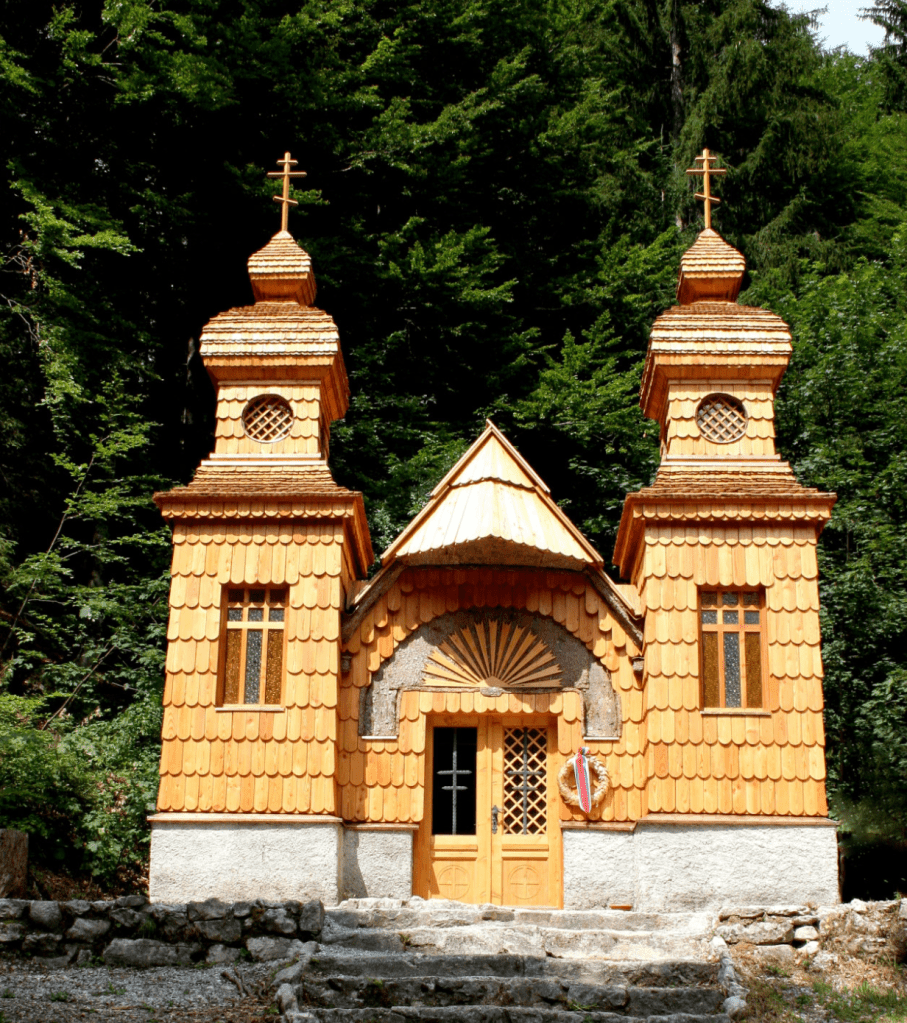
But first, a few facts and a little bit of history. Triglav National Park is one of the most accessible national parks in Slovenia, easily accessible from the country’s capital, Ljubljana, and a short drive from Bled. The national park got its name from the highest mountain in the park, which stands at 9,396 feet. While I am always a sucker for a mountain summit, this one would have to be viewed from a distance. One of the easiest ways to get through the national park is Vrsic Mountain Pass. The mountain road is windy and takes you up to just over 5,200 feet but it is WELL WORTH IT. This pass has 50 tight turns, each one labeled with a number (super helpful if you easily get carsick and need to know how many you have left!). At turn #8, you’ll find the Russian Chapel where over 300 Russian prisoners of war were forced to construct the road. They were all killed in an avalanche in 1916. This is worth a stop for sure as you can also hike around this area. I did a very poor job of reading up on Slovenian history prior to this excursion, so who knew? Not me, but I am glad I do now. When you look at the rugged landscape of this area, it is hard to imagine how roads were constructed over a century ago. Perspective and and appreciation for all that occurred during WWI in this part of the country definitely came out of this road trip. However…

While it is tempting to look off to the left, if driving along the Vrsic pass counter-clockwise, you definitely need to pay attention to the road. Enter the sheep.
There are way more farmhouses located off the mountain pass than I would have expected, and many of the locals have sheep and cows. Neither seemed to have gotten the memo about travel moving rather quickly along the roads. Fortunately, the cars in front of me had come to a stop so I wasn’t the one coming to a screeching halt as a group/herd/flock (???–what do you call more than one sheep?) were meandering across the road. The sheep also didn’t get the memo that they probably shouldn’t be hanging out IN THE MIDDLE OF THE ROAD. Cars were put in park as the sheep (also had to Google if “sheep” could be singular and plural) just kind of hung out. While this did cause a short delay in my traverse across the Vrsic Mountain Pass, it did give me time to down a peanut butter and jelly sandwich and a protein bar while waiting for the sheep to do their thing. While you can see the sheep anywhere, this particular stop came close to #18 on the pass.

When you get to #24 along the pass, you’ll have Kranjska Gora on one side and Trenta on the other side. This is where you are at the summit of the pass and at the highest elevation. Also, side note, make sure the rental vehicle you have can handle this kind of elevation but also consider how many turns you’ll be taking so the smaller the car the better!! The summit of the pass is a definite stopping point and you can take a hike closer to the mountains to the east to a cute little mountain hut called Poštarski dom na Vršiču. At this point, the mountain peaks will soar above you, and if you are lucky and have a clear day, it’s truly spectacular. This was yet again, another situation where I took a million pictures. Many locals have set up tiny little shops at the summit so all of us sucker tourists can buy trinkets and Slovenian things–enter the Slovenian magnet!
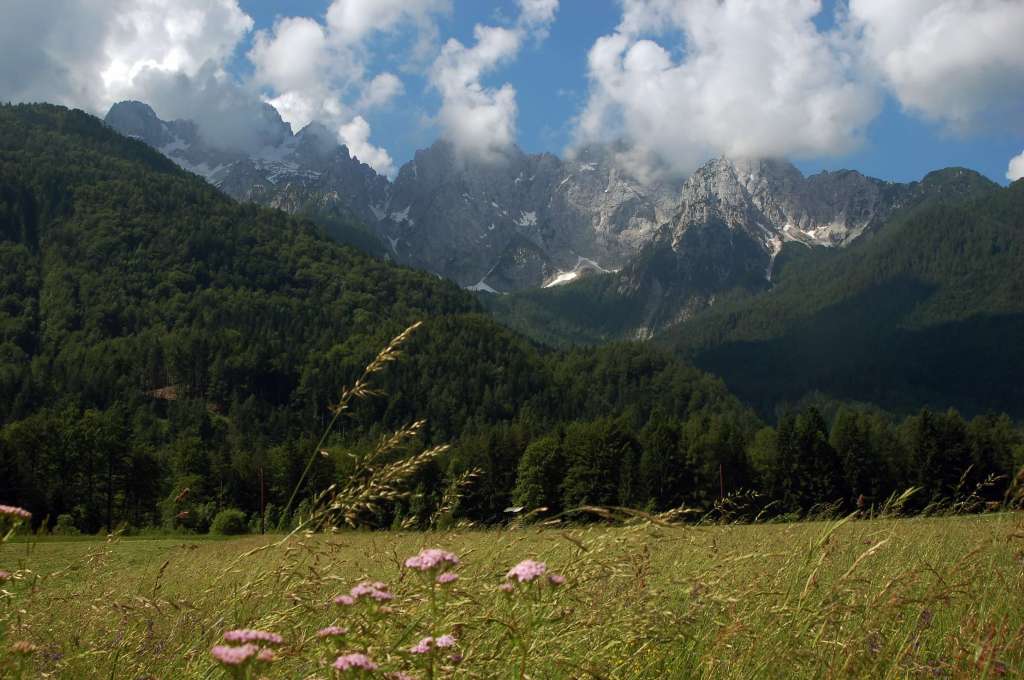
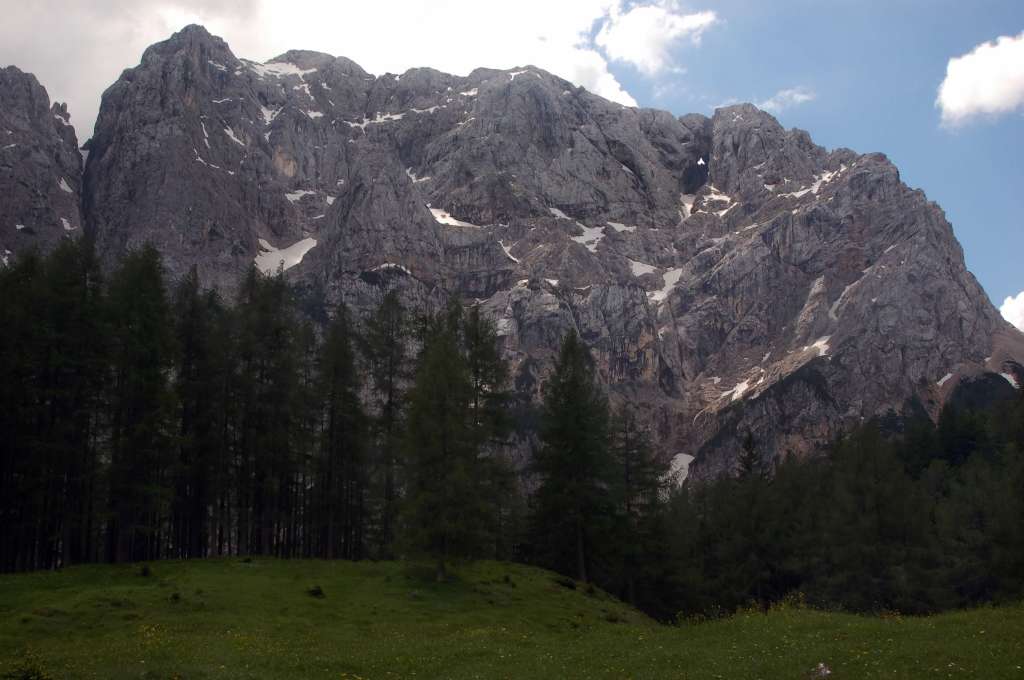
As you continue along the pass, you’ll see the walls of Prisojnik to the east, where you’ll get a closer look at the Pagan Girl (Ajdovska Deklicacana) where a woman’s face was created out of fragments in the rock. The Pagan Girl is actually an image of a petrified pagan goddess who would help mountaineers and those trying to cross the pass find their way during blizzards. Seriously, who knew?

I had spent so much time stopping at the various stops prior to the summit that it was starting to get a little dark. The sun was setting, and I still had almost half of the pass to go, so onward.
It wasn’t much after this point where I had the unfortunate encounter with the chicken who tried to cross the road. In the chicken’s defense, I was going over a small uphill and on a sharp turn to the left. The chicken came out of nowhere from the right and met its unfortunate demise with the front of my rented Peugeot. I could see a farmhouse off in the distance to the right, and figured the chicken probably belonged to that family. I had no idea what to do–return the chicken to the house? Bury the chicken? Keep driving? Again, the Frommers Guide to Slovenia provided no tips on how to handle this situation. I moved the car off the road as far as I could and gave proper thought to managing the chicken situation.
Ultimately, I decided I should let the family in the farmhouse know I was responsible for the death of one of their chickens. I had no idea if it was a pet or a source of income, but given that this was my first time taking out a farm animal in a foreign country, I wanted to try to be a good citizen about it. I quickly dug through my wallet for Euro to see if I had some cash to account for the loss of the chicken. I also quickly referenced Google translate, “I hit your chicken with my car, and I am very sorry. Do you want me to bring you the chicken?” (in Slovenian, Z avtom sem udaril tvojega piščanca in žal mi je. Kaj naj naredim?) I walked the 200 yards to the farmhouse where a soft light was sneaking out of the back window. Phone in hand, Google Translate message ready to go. I also failed to do proper research on the likelihood that I would get taken out by a local for any number of reasons. I clutched the rental car key in my other hand, exhaled and knocked on the door. A sweet older woman peered out the window from the door, clearly surprised to see a blonde (but darker blonde than normal), obviously American woman standing outside her door with her face illuminated by her cell phone. I held the phone out so she could see what I translated. She quickly started talking very rapidly to someone behind her, and shortly thereafter, an older man also appeared at the window. I showed him my translated message and waited.
He burst out laughing at this point, so I loosened the grip on my car key. But also, what was I supposed to do? It turns out they both spoke some English, enough to tell me that the chicken did not belong to them. They owned the sheep and cows that were grazing off to my left.
I quickly determined that my attempt to return the chicken’s body to its rightful owner was well intended but not necessarily. I trekked back to the rental, tried to scoot the chicken out of the middle of the road so it didn’t endure even more brutal hardship from oncoming cars and headed off to my next stop. I did overthink whether I should make contact with the chicken’s owners, but decided against it. Me and my Google Translate needed to get moving and there was NOTHING I could do about the chicken.
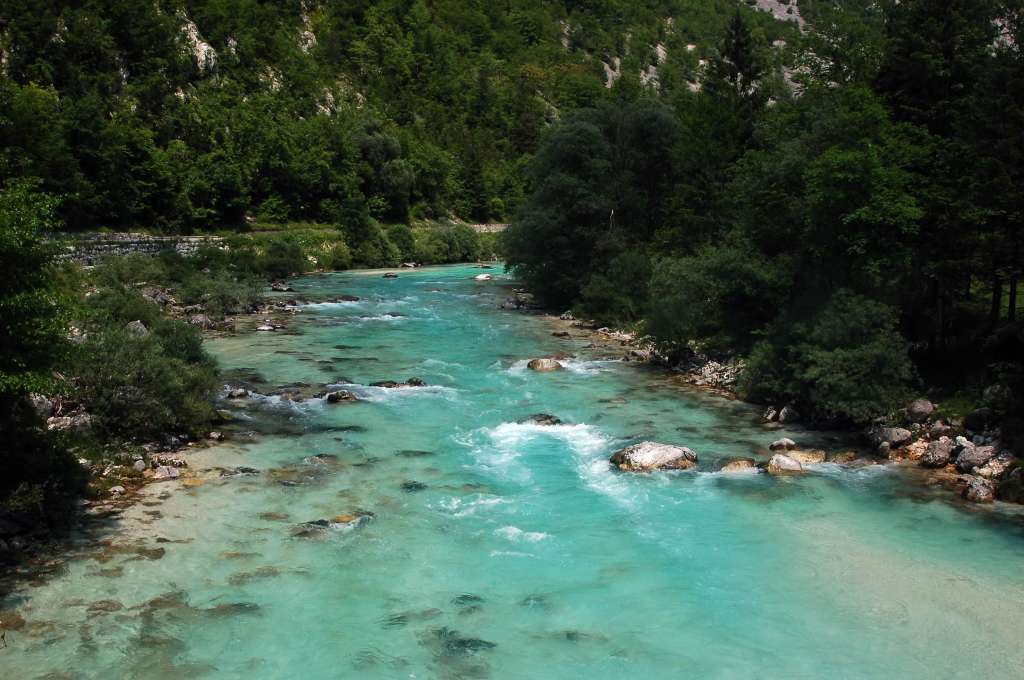
As I neared #50, I knew I had reached Trenta and the most outstanding Soca River. The water was literally turquoise and so beautiful. At this point, you can head off for so many other adventures like rafting or hiking. But again, the sun was dropping, I had taken out a chicken so was feeling badly about that, and still wanted to find a cool place for dinner in the idyllic town of Bled.

The drive back to Bled took about an hour, but it was one of those driving trips where I didn’t mind the time in the car at all. I was feeling a little melancholy given the chicken situation so I found my Adele playlist and was blaring it from my phone. I had my snacks, and a lovely dinner at Food Tour Bled was on tap. This day trip through the Julian Alps is highly recommended (10/10), and I would say to anyone venturing to this part of Slovenia, take the time and make the trip. If you don’t have your own transportation, you can do bus tours from Bled and Ljubljana.
Takeaways:
- Don’t overlook Slovenia if anywhere near the country. By far one of the best travel decisions I have ever made.
- Bled is surprising affordable compared to the country to its north, Austria. There’s a range of lodging from single room rentals to luxurious hotels.
- The locals are so nice, so helpful and friendly and want you to have a good experience. Everyone I spoke to had a tip or recommendation.
- Have cash with you. Not all places took plastic.
- I felt safe. I didn’t feel like I shouldn’t be walking around by myself. I took in the hike on my own, and I ate at the restaurants on my own. It’s definitely a place for solo travelers to spend some time.
- Do the touristy stuff–the castle, the boat ride to Blejski Otok, but don’t overlook the off-the-books stuff either. Take the hike up to Mala Osojnica to see the magical view of Lake Bled below and wander into the restaurants and coffee shops, even if you can’t pronounce the name.
- Read up on the history. It’s fascinating. Archeologists have found evidence of prehistoric and Slavic settlements dating back to the 8th and 9th centuries. We also seem to overlook much of the Slovenian history in the World History classes we take in high school and college (and full disclosure, I actively did not seek out the information either, so definitely on me).
- Take a ton of pictures. No one will believe it until you show them.
- Be wary of the livestock!!
- Take it in!!! This place is magical, and I felt so alive the whole time (super cliche, but definitely true).

 Tales from a Solo Girl Traveling the World